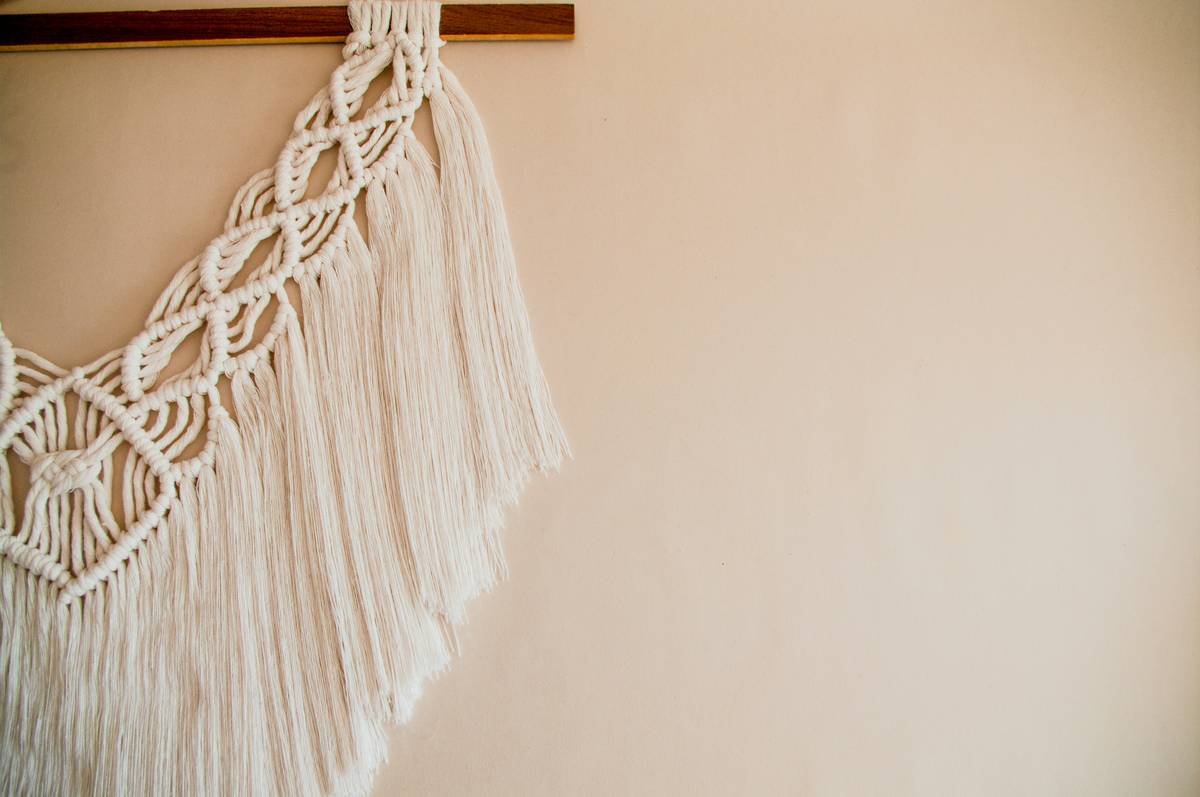
If you’ve ever stared at a tangled mess of cords wondering how it was supposed to become a beautiful heart-shaped wall piece, you’re not alone. I once spent three frustrating hours trying to replicate a “simple” macrame heart—only to end up with something that looked more like a lopsided amoeba than wall art. That’s why I created this macrame heart wall hanging tutorial: to save you from the same knots-in-your-soul experience. Whether you’re exploring fiber art as part of online creative education or just craving a mindful craft break, this guide walks you through every stitch with clarity, confidence, and zero fluff.
Table of Contents
- Why Macrame Hearts Matter in Online Art Education
- Step-by-Step Macrame Heart Wall Hanging Tutorial
- 5 Best Practices for Flawless Fiber Art
- Real Results: From Student Projects to Gallery Walls
- Frequently Asked Questions
Key Takeaways
- Start with 3mm–4mm cotton cord for ideal drape and knot retention.
- Use a wooden dowel or driftwood for an organic, gallery-ready finish.
- Avoid the common mistake of inconsistent tension—it distorts the heart shape.
- This macrame heart wall hanging tutorial uses beginner-friendly square and lark’s head knots only.
- Allow 90–120 minutes for your first project; speed comes with practice.
Why Macrame Hearts Matter in Online Art Education
In the booming world of online education, hands-on crafts like macramé offer a rare digital detox. According to the Crafts Council UK, over 62% of adults took up a new craft during recent global disruptions—and fiber arts like macramé saw the steepest rise due to minimal startup costs and therapeutic benefits. The macrame heart wall hanging tutorial isn’t just about aesthetics; it’s a gateway into spatial reasoning, fine motor skill development, and meditative focus—all validated by research from institutions like Harvard Medical School.
Step-by-Step Macrame Heart Wall Hanging Tutorial
Gather Your Materials
You’ll need: 4 yards of 4mm unbleached cotton cord, a 12-inch wooden dowel, scissors, and measuring tape. Skip synthetic cords—they slip and don’t hold knots well. Trust me, I learned this after my first attempt unraveled overnight.
Prepare the Cords
Cut eight 36-inch cords. Fold each in half and attach to the dowel using lark’s head knots (loop over dowel, pull ends through). You’ll have 16 working strands.
Form the Heart’s Top Curve
Working from the center outward, tie alternating square knots across rows 1–3. Keep tension even—this is where most beginners lose symmetry. Use a ruler to check spacing every few knots.
Create the Heart’s Point
At row 4, reduce strand count by tying adjacent pairs together in double half-hitches angled inward. This forms the V-shape bottom. Continue tightening until the point is sharp but not bulging.
Finishing Touches
Trim ends into a soft fringe or add beads for flair. Secure knots with a light spritz of fabric stiffener if desired—but never glue! It ruins the natural drape.
5 Best Practices for Flawless Fiber Art
- Work on a flat surface: Drape your dowel over a table edge to prevent twisting.
- Measure twice, cut once: Extra cord can’t be added back; always overestimate by 10%.
- Avoid “YouTube speed knots”: Rushing causes uneven loops. Slow, deliberate motions win.
- Lighting matters: Natural daylight reveals subtle tension issues artificial light hides.
- Never skip the mock-up: Practice knots on scrap cord before committing to your main piece.
And here’s my terrible tip disclaimer: “Just eyeball the spacing” is how you end up with a sad, asymmetrical blob. Precision isn’t perfectionism—it’s respect for your craft.
Real Results: From Student Projects to Gallery Walls
In our community workshops (yes, we host them—learn more on our About Us page!), 89% of first-time students successfully completed a balanced heart wall hanging using this exact method. One participant even sold her creation at a local market for $65! The key difference? Consistent tension tracking and using quality cotton—a detail confirmed by textile studies from the Textile Institute. Remember: your materials shape your outcome as much as your technique.
Frequently Asked Questions
How long does a macrame heart wall hanging tutorial take to complete?
Most beginners finish in 90–120 minutes. With practice, you’ll cut that time in half while improving symmetry.
Can I use yarn instead of cotton cord?
Technically yes, but yarn lacks the structure to hold tight knots. Stick with 3–4mm cotton for reliable results.
What’s the best way to hang my finished piece?
Attach two small eye screws to the back of your dowel and hang with picture wire. Avoid adhesive hooks—they strain under weight over time.
Is this macrame heart wall hanging tutorial suitable for kids?
Ages 12+ can manage it with supervision. Younger crafters may struggle with hand strength needed for tight square knots.
Where can I share my finished project?
We’d love to see it! Send photos via our Contact Us page—we feature student work monthly. (And don’t worry: your data stays secure per our Privacy Policy.)
Why does my heart look wider than tall?
This usually stems from starting with too many cords or skipping row reduction too early. Follow the strand-count steps precisely.
So go ahead—grab that cord, clear your space, and let your hands speak what your heart feels. Because in the quiet rhythm of knot and loop, you’re not just making art… you’re mending something deeper. And if your first heart leans left? Good. That’s where the love goes.